
The Agenda, Treasurer’s Report & unconfirmed Minutes of the meeting in June are at https://hughendenresidents.org/docs/
Category Archives: HVRA
DIG Update End May
- Transport for Bucks Actions
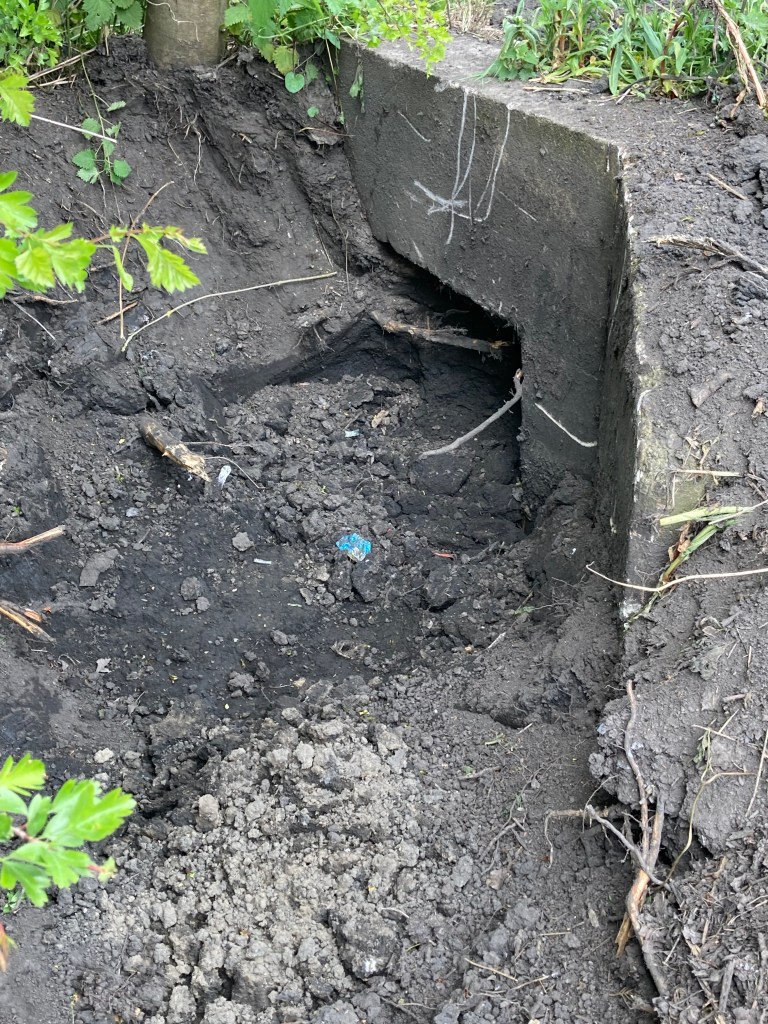
There had been reports of water seeping through the road surface near the foot of Cryers Hill, and about 50 metres along towards High Wycombe. On a very wet day, we eventually spotted water bubbling up in the hedge on the pumping station side of the road, behind the bus stop. On closer inspection this turned out to be a sizeable culvert, but which was almost entirely blocked up and clearly had not been cleaned out for years.
We reported this via FixMyStreet and this is now completely resolved. See pic.
At the last DIG meeting it was agreed that we would ask TfB to inspect the large culvert that runs from the Harrow through to Deeters, and which carries the Hughenden Stream plus road runoff underground along this section. The concerns were that although the road drains are regularly jetted, this large culvert is not and could well be silted up. Again, TfB have checked this out and lifted access chambers. They say that there is little sign of silting up.
2. Thames Water
At the last DIG meeting we discussed the lining work that had been carried out lining a section of the Hughenden sewer along Warrendene Road. The DIG considered that because the water table was at its highest in the Boss Lane to the Surgery area, and that sewer and stream flooding also occurred here, then this area should be a candidate for lining.
This has been put to Thames Water, but their response is that they have no evidence of water ingress in this area, and so have no plans to carry out further lining in Hughenden Valley at this stage. However, they report that additional monitors are being installed across the catchment and the ongoing GISMP (Ground Infrastructure System Management Plan) work being carried out is improving the resilience of the system.
3. Other
We have added the Bucks Council Asset Map (All the road drains) to the HVRA website on the DIG Documents page.
No action yet from Affinity regarding checking/cleaning the culverts under the pumping station.
Paul Woodford
HVRA meeting 7th June 2022

HVRA AGM Thursday 19th May 2022 at 7.30 p.m. in the Large Village Hall
Papers for HVRA committee 3rd May
HVRA – Unconfirmed Mins 5.4.22
Map for item item 11.d : 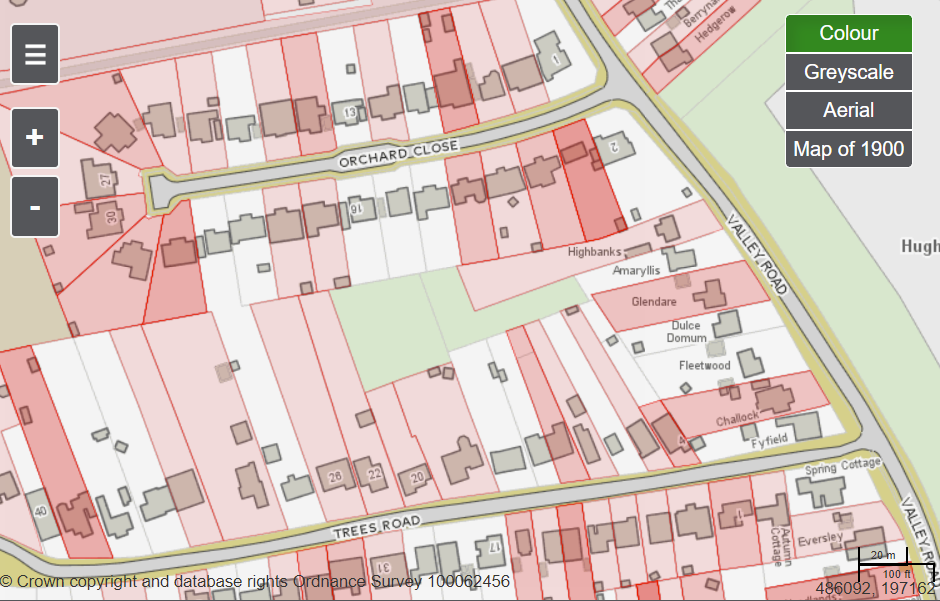
Hughenden News – Spring 2022, crossword answers
Committee meeting 5th April 2022
DIG Article for Hughenden News Spring issue
HVRA Drainage Improvement Group
The Dew Pond
Along the footpath between Valley Road and Boss Lane, in the field on the right is a concrete lined pond shaded by a pretty Weeping Ash (albeit leafless at present). Locals will know this as the Dew Pond, put there for the watering of livestock.
The origins of dew ponds lie in pre-history, but are generally regarded as shallow depressions in grazing areas traditionally lined with puddling clay or chalk and allowed to fill themselves from moisture in the air. In practice it is generally considered that traditional dew ponds are just as likely to be filled by water runoff from the fields and, of course, rainfall. Essentially, a dew pond is an artificial rather than a natural feature. Most have largely disappeared and replaced by piped water supply.
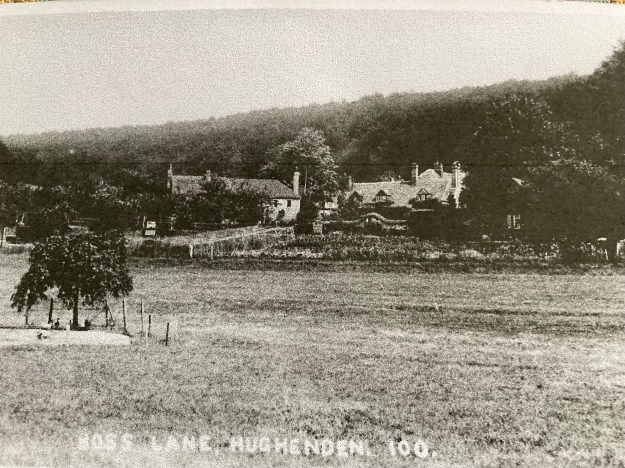
The pond on Boss Lane Farm is a concrete construct, a relatively modern method introduced in the early 1900’s, but clearly used on many farms and this one fits the standard profile. The pond is not filled these days and the original tree (see both pictures) is possibly suffering from old age and Ash die back.
In the early days it seems likely that being adjacent to the Hughenden Winterbourne Stream, when the stream flowed it would feed the pond as it still does today. At some point a water supply was laid to enable water to be pumped from two wells on the farm to fill the pond.
As it happens, the pond is just on a hundred years old, built by a former owner of Boss Lane Farm somewhere between 1918 and 1922. Two photos accompany this article, one recently taken and the other, grainy picture is believed to be from the early 1930’s.
So, is this a proper dew pond? Well, yes, it would certainly seem so despite being later updated to a pumped water supply. And it may be that the pond we see was created where an earlier dew pond sat. To make a feature of the pond it would require restoration involving re-lining and a new water supply, possibly from a borehole, which would be an expensive process.

Long may it live as a rather nice village feature.
Thanks to Matt Hopkins for his help in putting this together.
DIG Activities
The winter has been relatively kind to us this year – it has been generally mild, not too wet and while the Hughenden Stream continues to flow merrily through the park, it is dry in its upper reaches.
The DIG will meet in March to discuss plans by the utility companies affecting the Valley and to plan our activities for the year. Typical work we are looking to get done this year include:
- Fixing of puddling at the foot of Trees Road by TfB (In the budget, we understand)
- Surveying and clearance of culverts & drains at the pumping station site by Affinity (promised last year…)
- Continued work on monitoring and further lining of the Hughenden Sewer to prevent surface water ingress by Thames Water. (Apparently 139 metres along Warrendene Rd were lined last year).
Paul Woodford
HVRA documents
A quick reminder that minutes of past meetings & AGMs are held at https://hughendenresidents.org/docs/
A recent addition is a Report on a presentation by PC Lee Turnham on Speeding issues, the presentation was given at the December 2021 meeting.
 Hughenden Valley Residents Association